No Products in the Cart


Garba is a traditional Gujarati dance performed in a circle around a decorated earthen pot, most commonly during the nine-day Navratri festival. It's both a devotional practice honouring Goddess Durga and a vibrant community celebration — one of India's most recognisable folk dance forms.
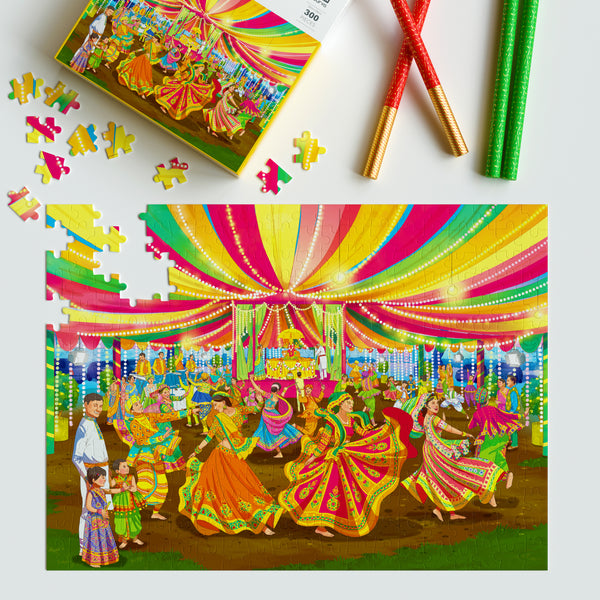
Garba – The Dance of Reverence (300 pieces)
Bring the colour of Navratri home with this Garba jigsaw puzzle.
Shop this puzzleThe Garba dance, whose traditions stretch back at least to the 15th century, originated in Gujarat as the festive expression of devotion to the goddess Devi. Dancers move in a circle around an attractively decorated earthen pot with a Diya (lamp) placed inside it, symbolising the body — within which divinity is believed to dwell. The pots used during Garba are traditionally painted in white and bright red.
The word "Garba" derives from the Sanskrit "Garbha," meaning "womb." The circular dance around the lit pot represents the cycle of life — from life, to death, to reincarnation — with the Goddess as the one constant, unchanging and invincible presence at the centre. Dancing Garba is a way of celebrating that every individual carries the divine energy of Devi within them.

Garba is classified as a folk and devotional dance, not a classical dance form in the formal Indian classical dance tradition (unlike Bharatanatyam or Kathak). It's a participatory, community dance rather than a performance art with codified classical technique — which is part of why it's so widely danced by people of all skill levels during Navratri.
Garba is danced throughout the nine nights of Navratri, celebrated every year in the Hindu month of Ashwin (typically September or October). The festival honours Goddess Durga, and Garba — alongside the related Dandiya Raas — is the dance through which communities express that devotion together. Dancers traditionally dress in colourful costumes with oxidised jewellery; men wear kafni pyjamas with knee-length Ghagra kurtas and a pagadi, though women are the more typical performers.
What does the word Garba mean?
Garba comes from the Sanskrit word "Garbha," meaning womb — symbolising the cycle of life danced around a central lit pot representing the divine.
Where did Garba originate?
Garba originated in Gujarat, India, with traditions dating back at least to the 15th century.
Is Garba only danced during Navratri?
Garba is most closely associated with Navratri, but it's also performed at other Gujarati celebrations and social events throughout the year.
Is Garba a religious dance?
Yes — at its core, Garba is a devotional dance honouring Goddess Durga, though it has also become a major social and cultural celebration beyond its religious roots.
It's time to celebrate Navratri with the most vibrant and energetic dance festival of the country with the Garba Puzzle from Aurva. It has been vibrantly portrayed for you to relish and decode, from the victory of Goddess Durga over Mahishasura to the festive surroundings in the neighbourhood.

Explore: Garba - The Dance of Life puzzle by Aurva

